AI food tracking
Simple
13 Jul, 2024
As design owner on Simple's core team, I turned a database tracker into an AI nutrition loop that became the company's strongest retention driver. My work laid the foundation for the app's core mechanics, improving retention and winning awards
Timeline
2022–2024
Role
Senior Product Designer
Scope
UX/UI, Design System, Art Direction
Product
0
1/N
, B2C, Wellness


Simple is a health and weight-loss app backed by Palta (Flo Health, Lensa). It’s one of the leaders in its category, with 15M+ downloads, $160M+ ARR, 400K+ MAU. The audience is mostly women over 40, disillusioned with traditional dieting.
When I joined in 2022, Simple was still mostly a fasting timer. It had a strong habit loop and product market fit, but little reason to open the app outside a fast. We needed to figure out what came next.
The challenge
Simple needed another daily habit beyond fasting. The goal was to improve retention by giving users a reason to come back throughout the day and creating better data for personalization.
Food logging was the obvious bet. But Simple’s users weren’t calorie counters. That’s why they chose us. We had to make tracking useful enough to earn repeat use without turning Simple into a calorie-counting app.
Exploration
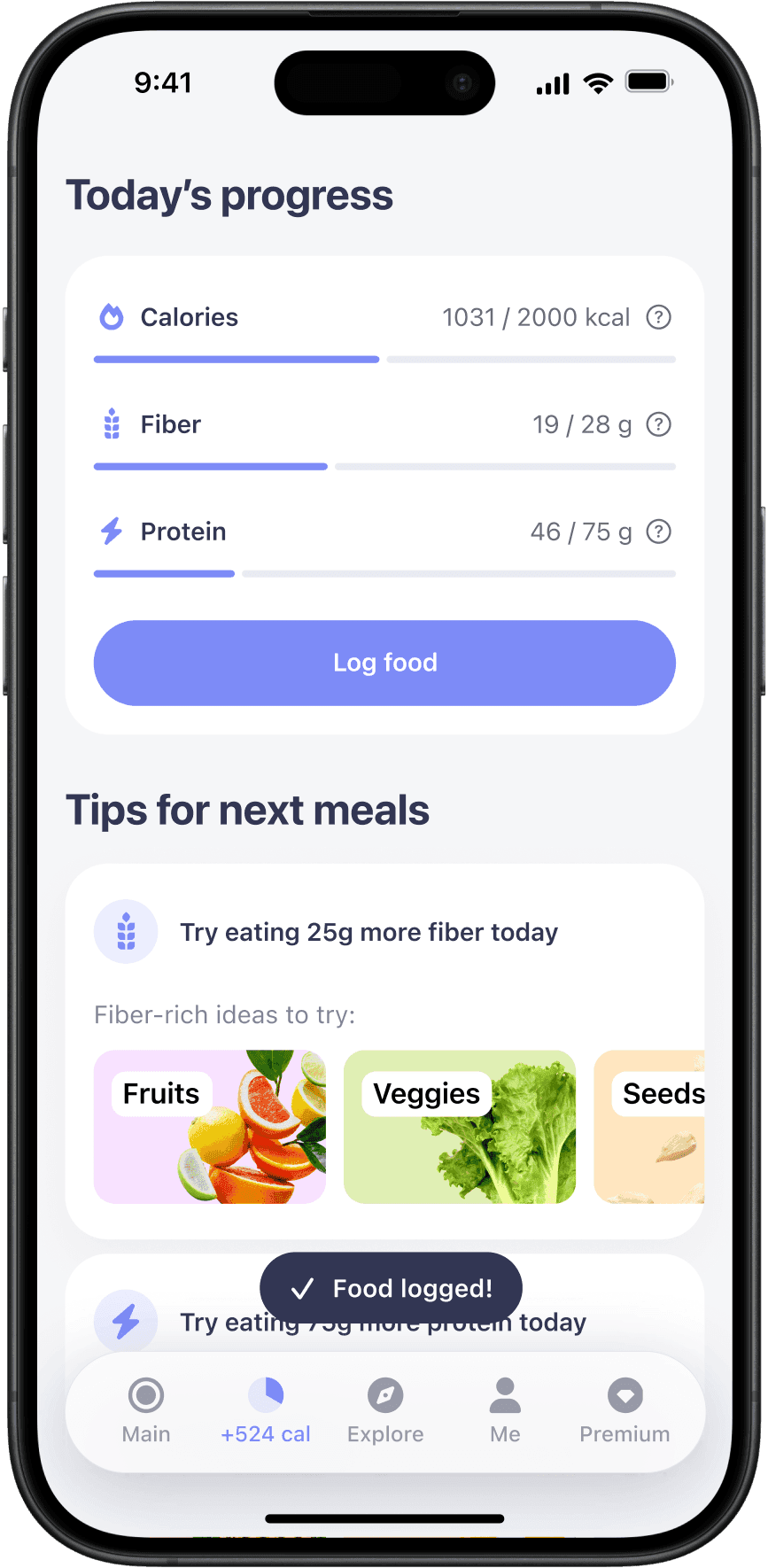
The food database was the first bottleneck. UXR showed that users struggled to find what they ate. Search was unforgiving of typos or unique foods because our database was extremely limited.
I explored ways to make the experience useful around that constraint: daily progress, timelines, nutrition labels, and lightweight feedback.


Eighteen months of small, reactive experiments moved retention by only 1–2% in total. We were slowly realizing that optimizing around a limited database is not the way.

Effortless input
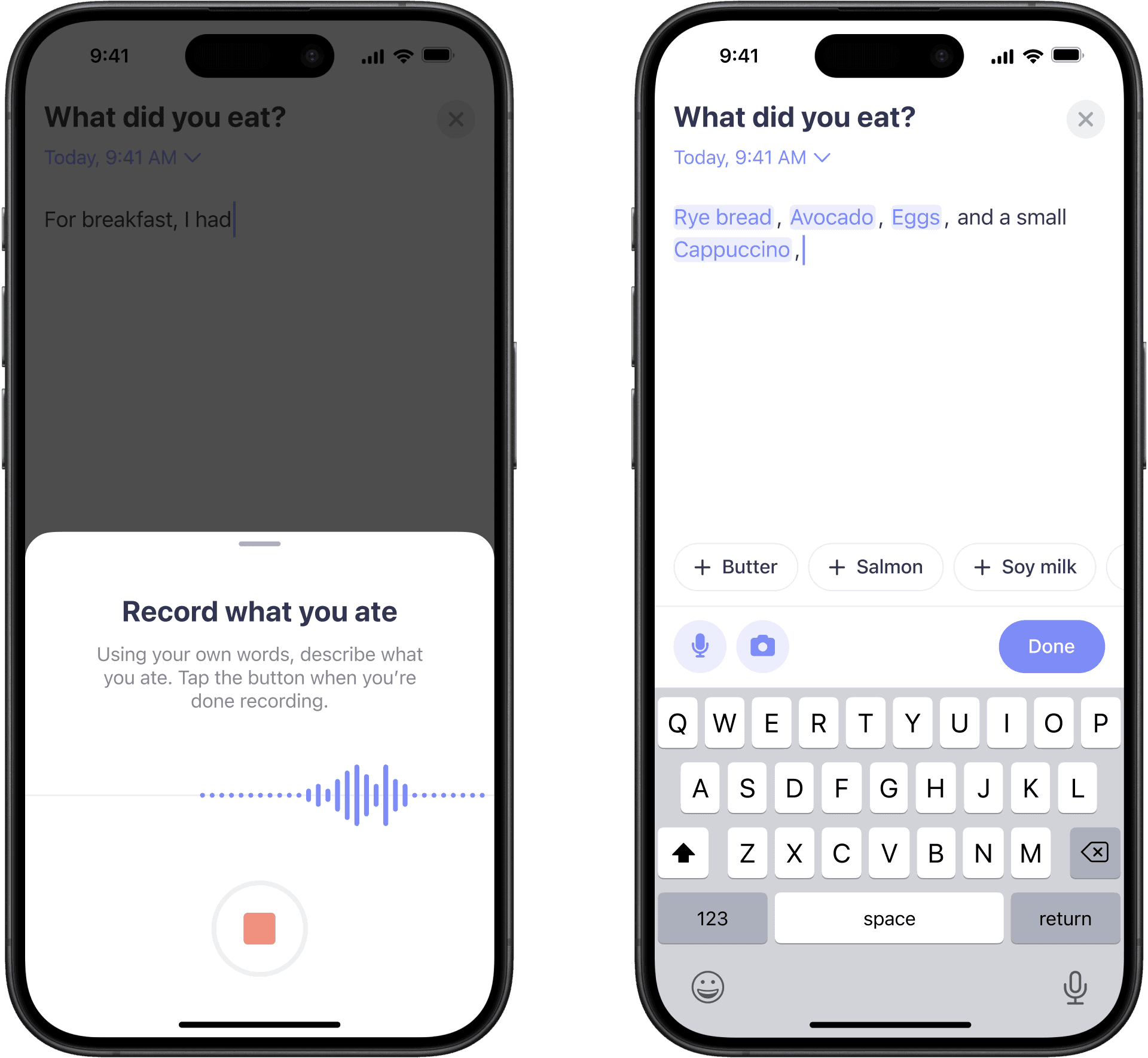
By early 2023, AI was good enough to remove the database constraint. Users could just describe what they ate.
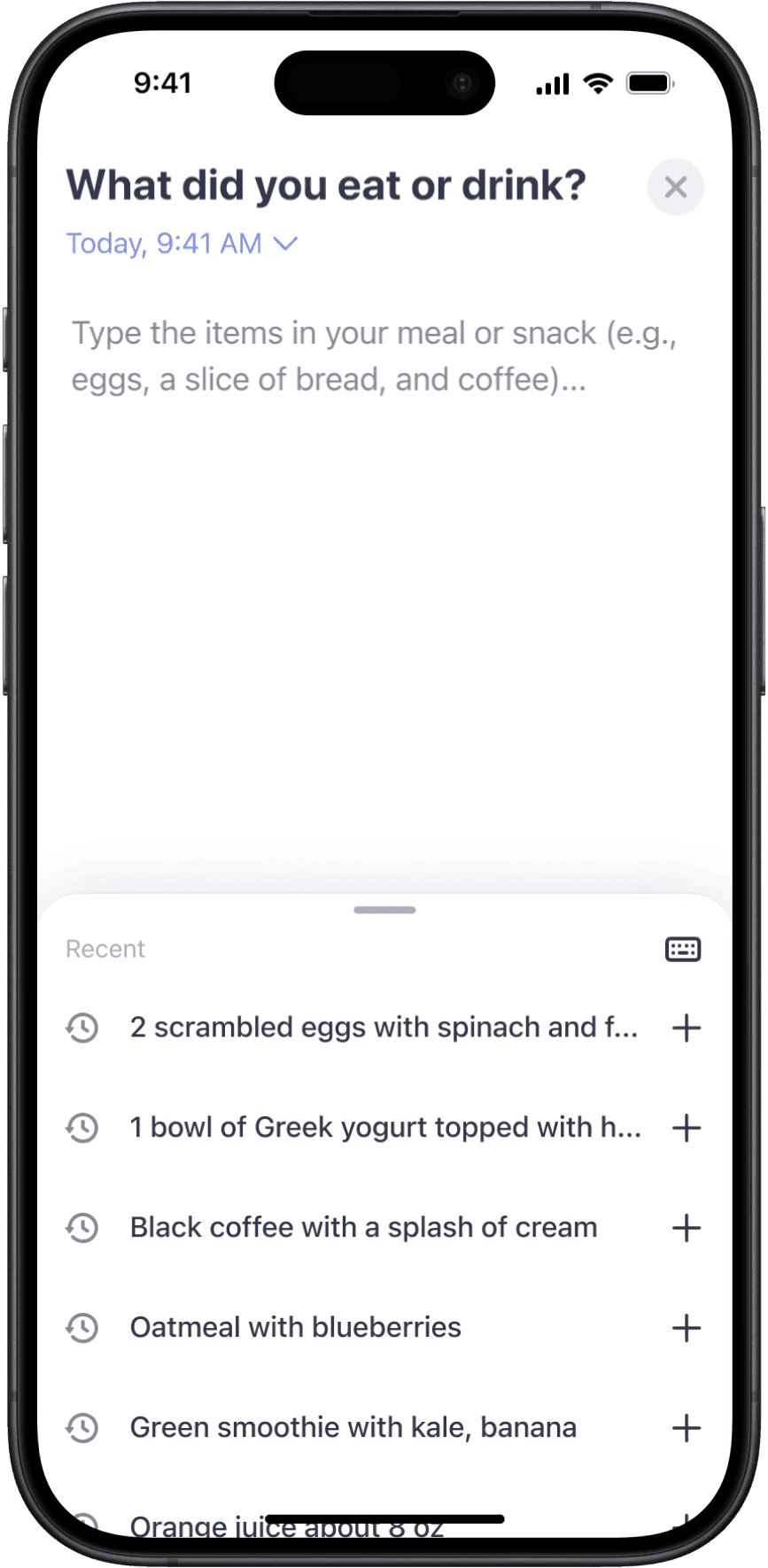
I designed a noting tracker for text and voice input, turning natural language into structured entries our feedback system could score. UXR confirmed that users saw taking notes as an easy, simple way to log food.

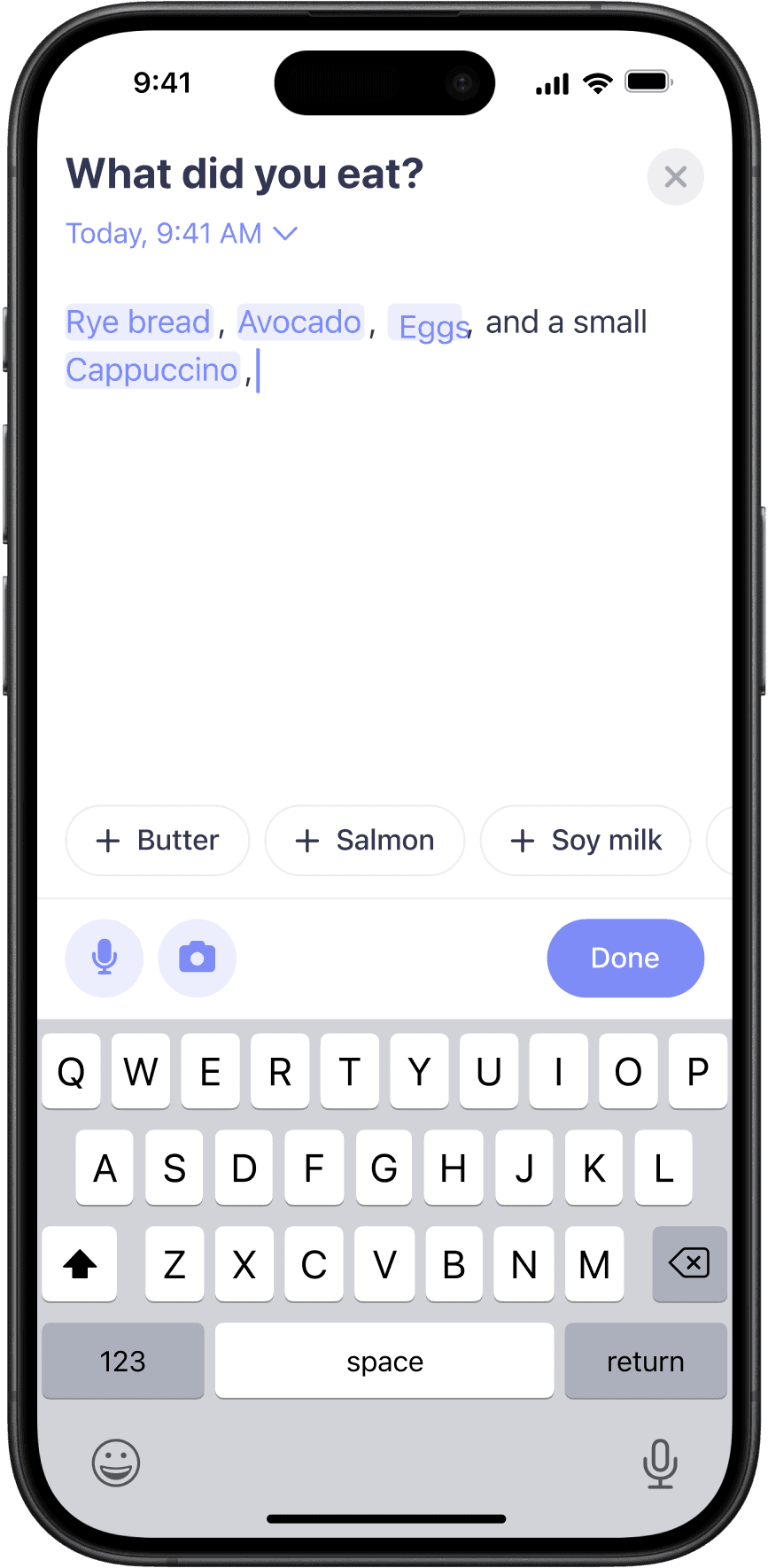
The first version lifted D7 food-tracker retention by 4%. For free users, the lift was 18%. The key metric started moving, but the product loop was still yet to be closed.
Humane feedback
The next problem was the payoff. After logging, users still landed on macros and nutrient bars they did not know what to do with.
UXR made the gap clear: “When it comes to tracking you a feeling of comfort.” People wanted a quick sense of how the meal landed, as well as support regardless of the outcome.
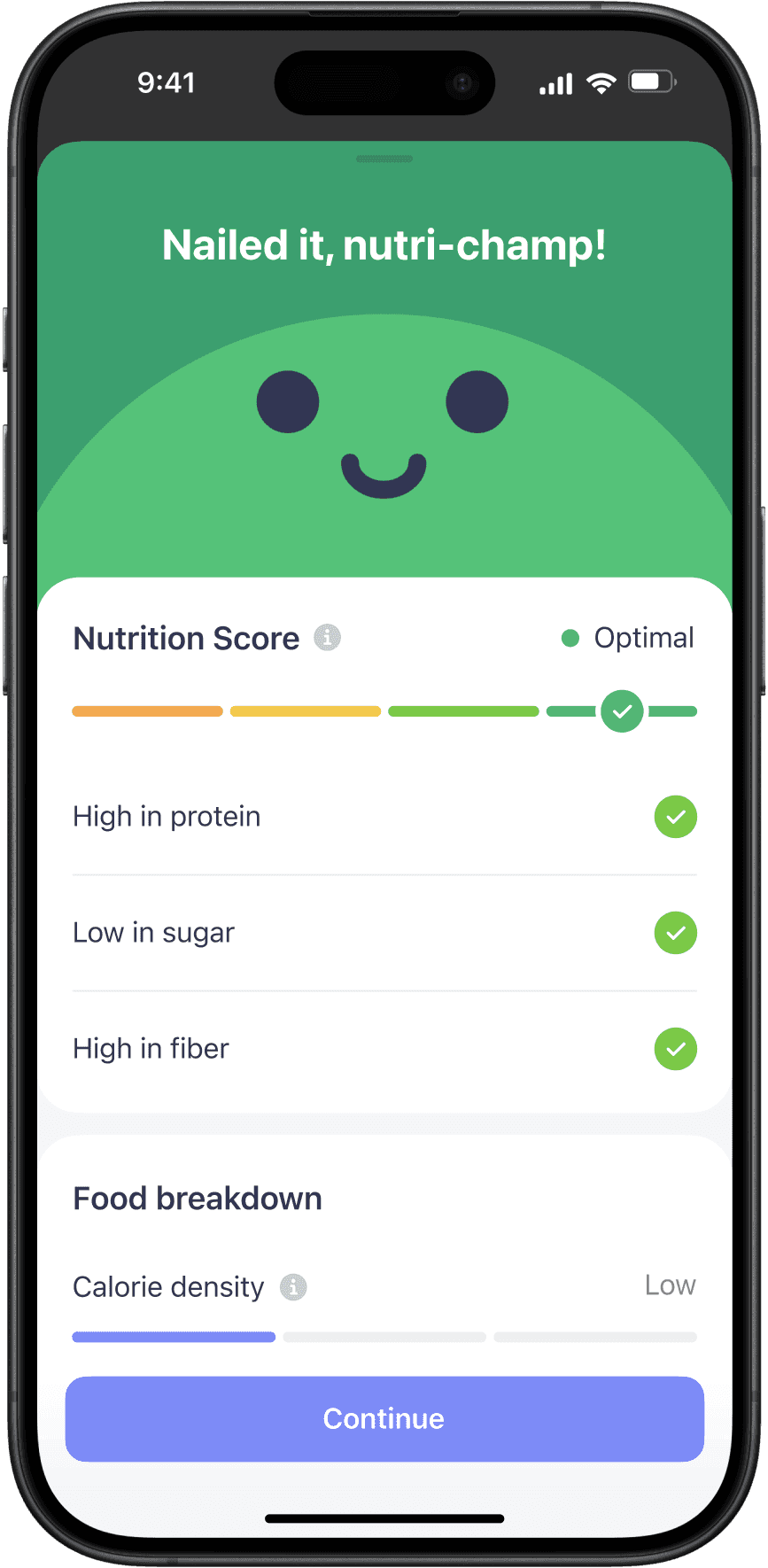

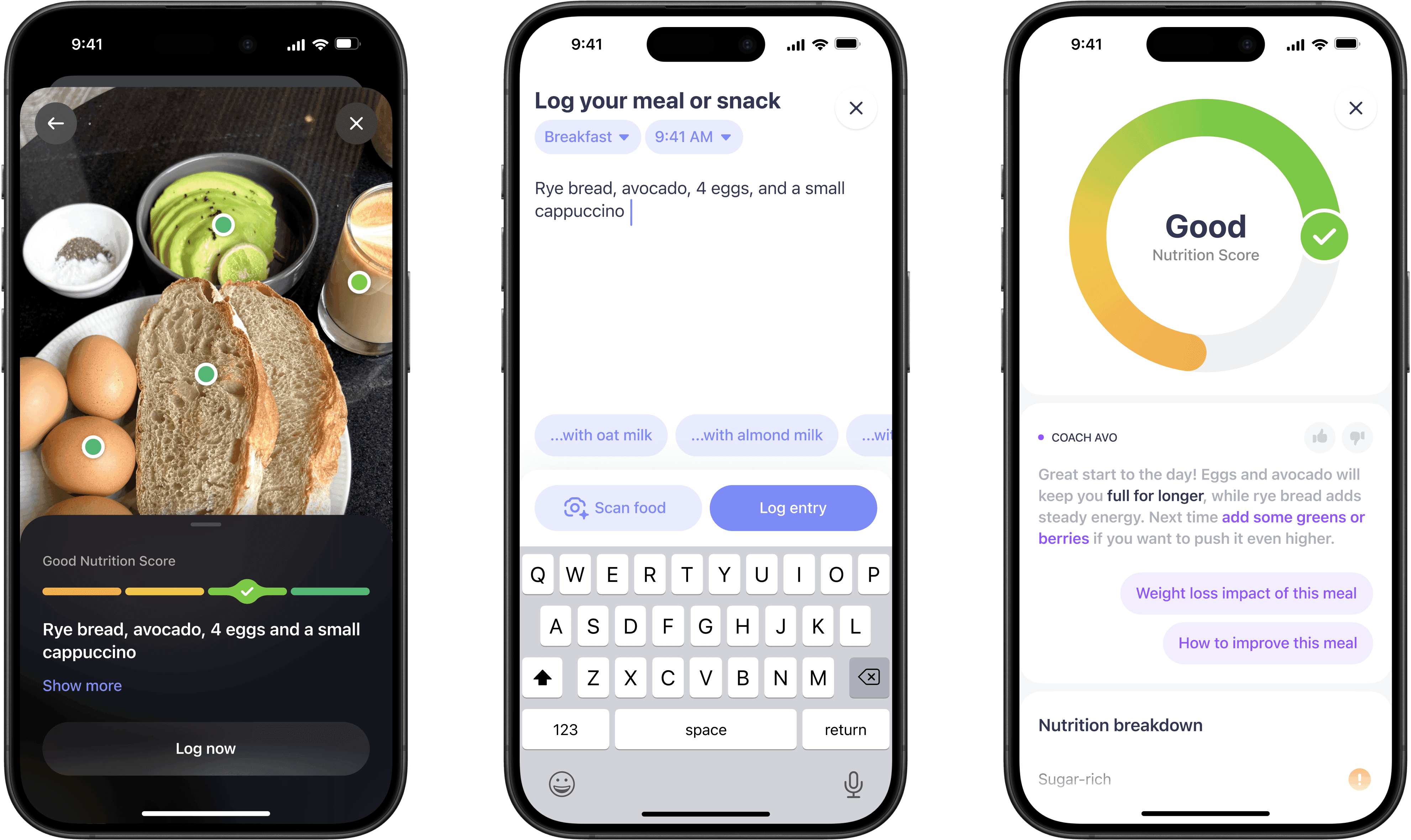
I designed a four-tier meal score inspired by the European nutrition label system: Low, Fair, Good, Optimal. I also worked with a graphic designer on the character states so even low scores felt supportive.
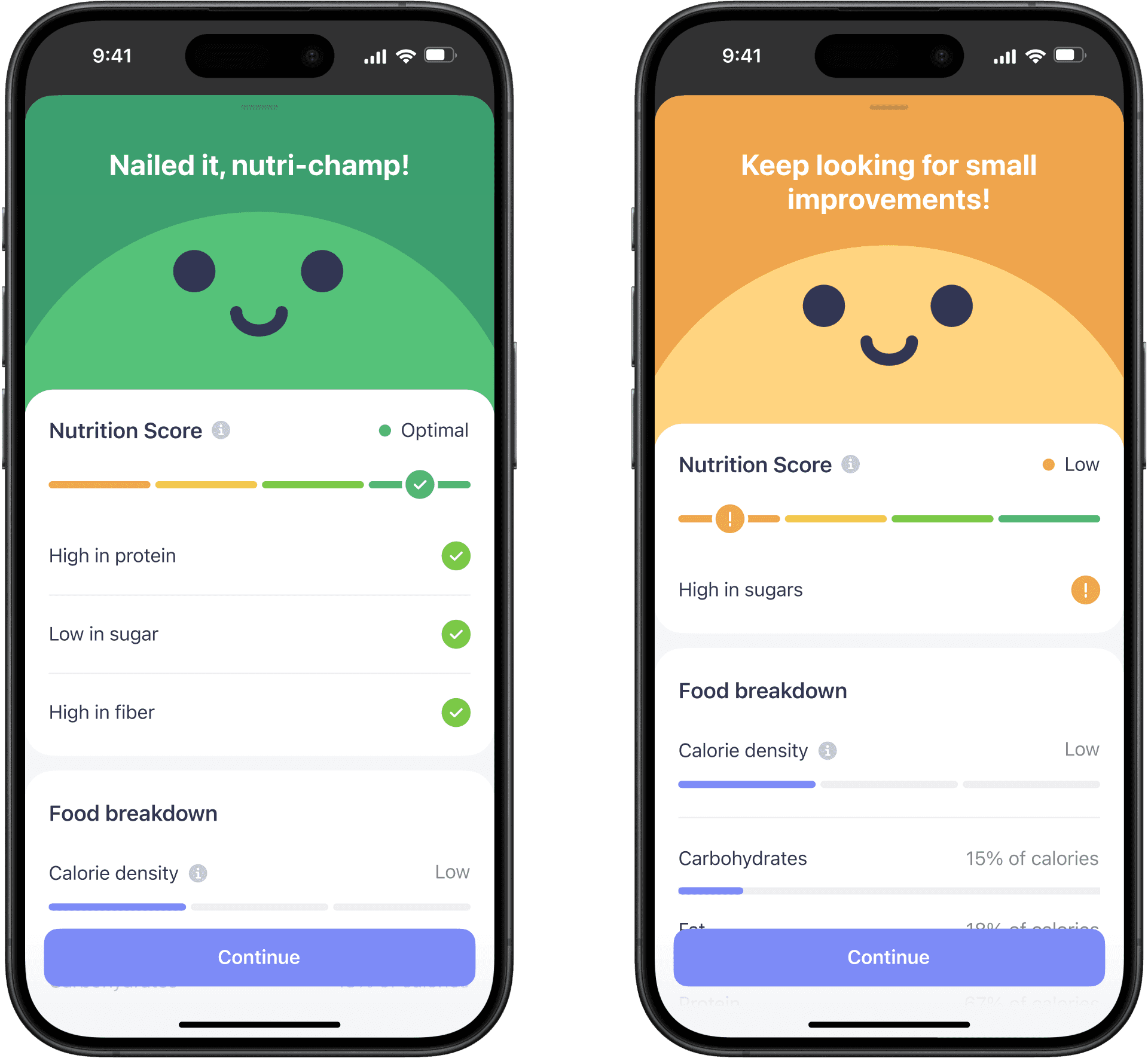
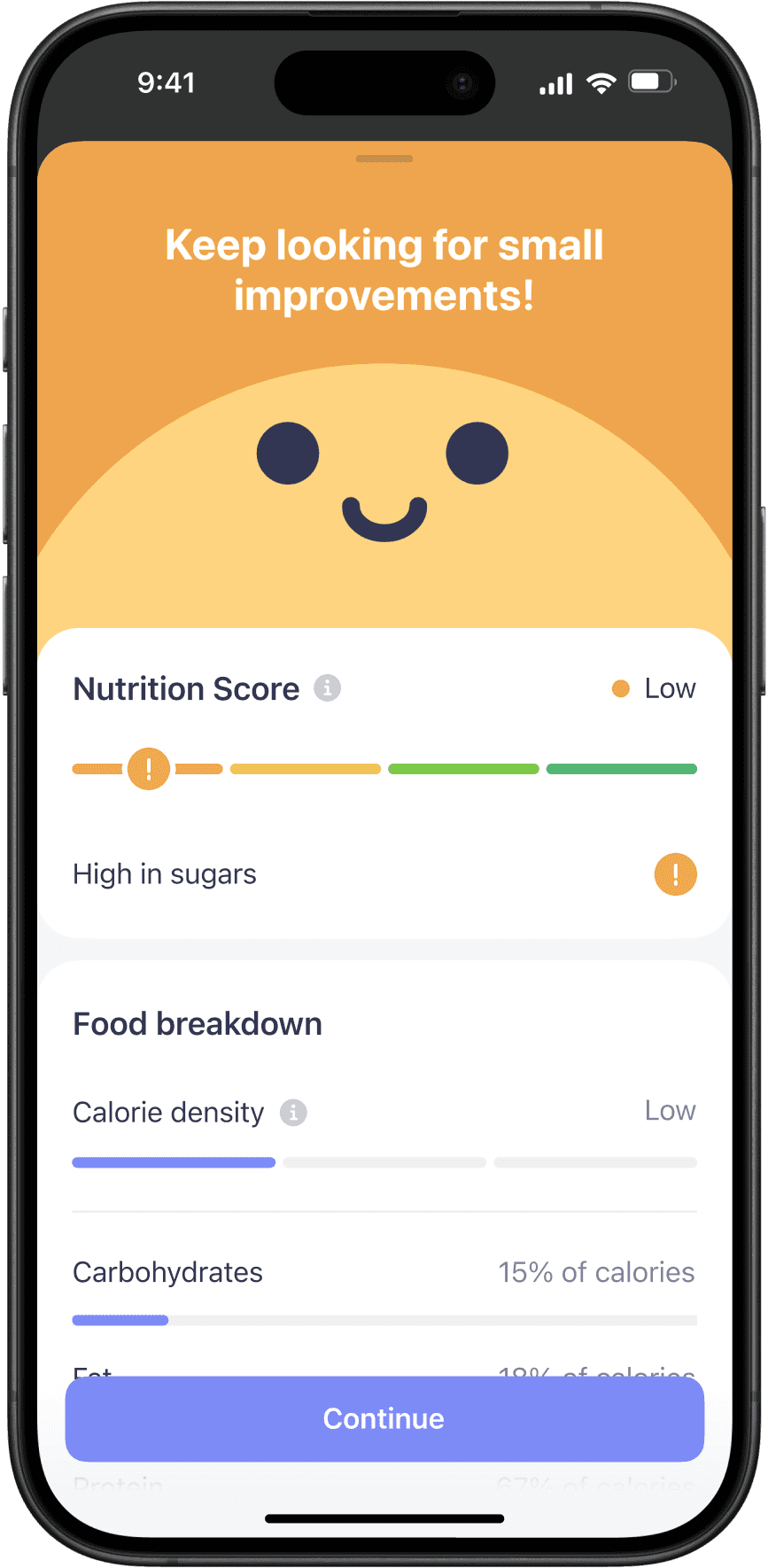
The new feedback lifted D3 food-tracker retention by 15%, the biggest single improvement to the loop over the years. It later won the British Dietetic Association Digital Innovation Award 2023/24.
Improving legibility
Once Food Feedback was in daily use, the character started competing with the result. Returning users wanted to see their score first, then understand why and what to do next.
I moved the score to the top of the hierarchy and reduced the character’s role. The result became the first thing users saw, with the explanation underneath.

By then I was also owning more of the AI Coach direction. I brought that work into Food Feedback and replaced static copy with AI generated explanations specific to each meal. I worked with another designer to make the four tier score easier to scan.

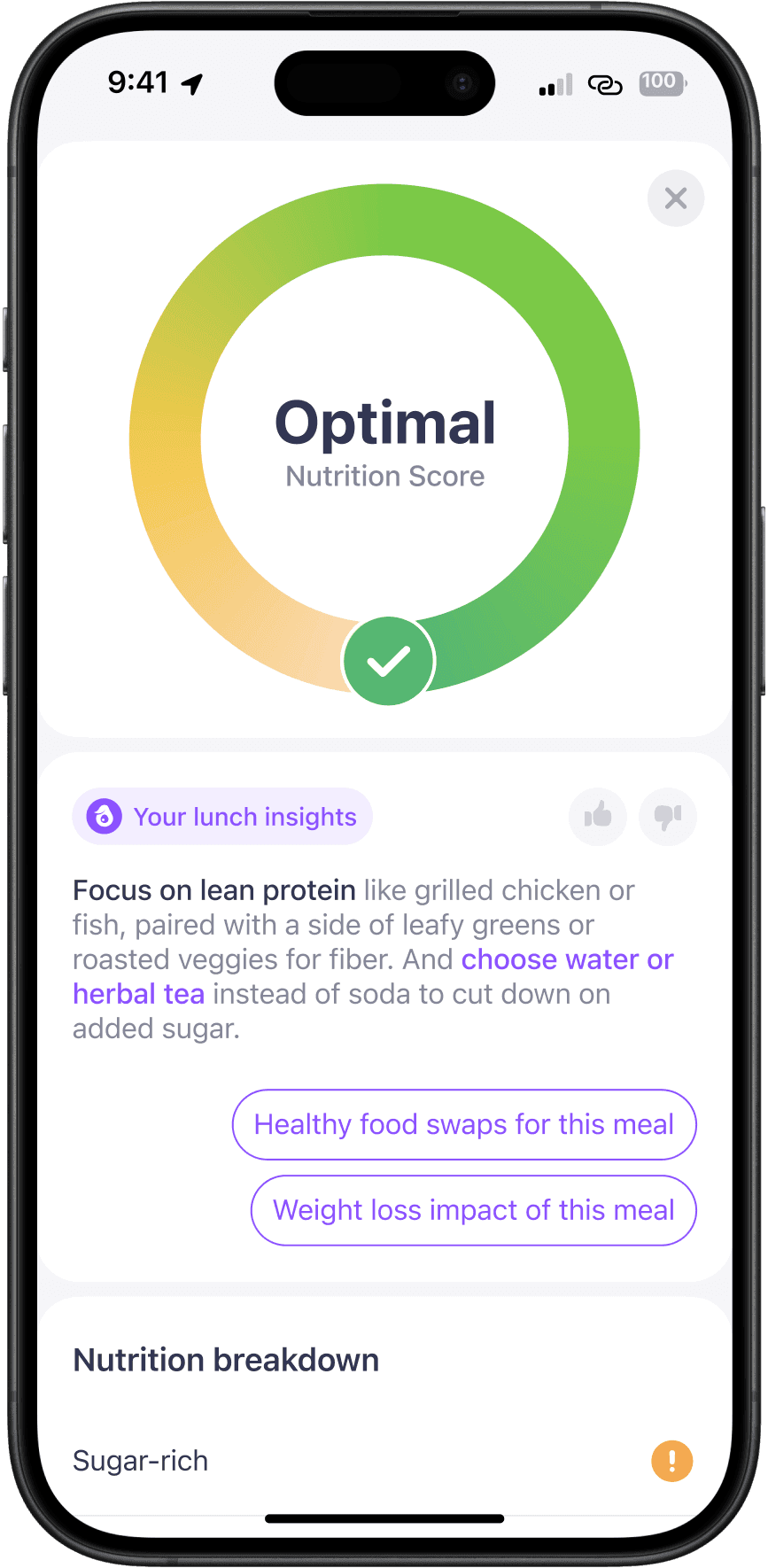
The new score and suggestions lifted D3 product retention by 6%. The score also lifted D7 meal track retention by 4.6%.
Just as importantly, time on the result screen dropped by 10%. Users were getting the answer faster.
Multimodal tracker
By this point, the feedback loop worked. The remaining friction was input itself. Users still had to describe or type what they ate. I created Avo Vision to removed more of that effort. Just point the camera at food and the app does the rest.
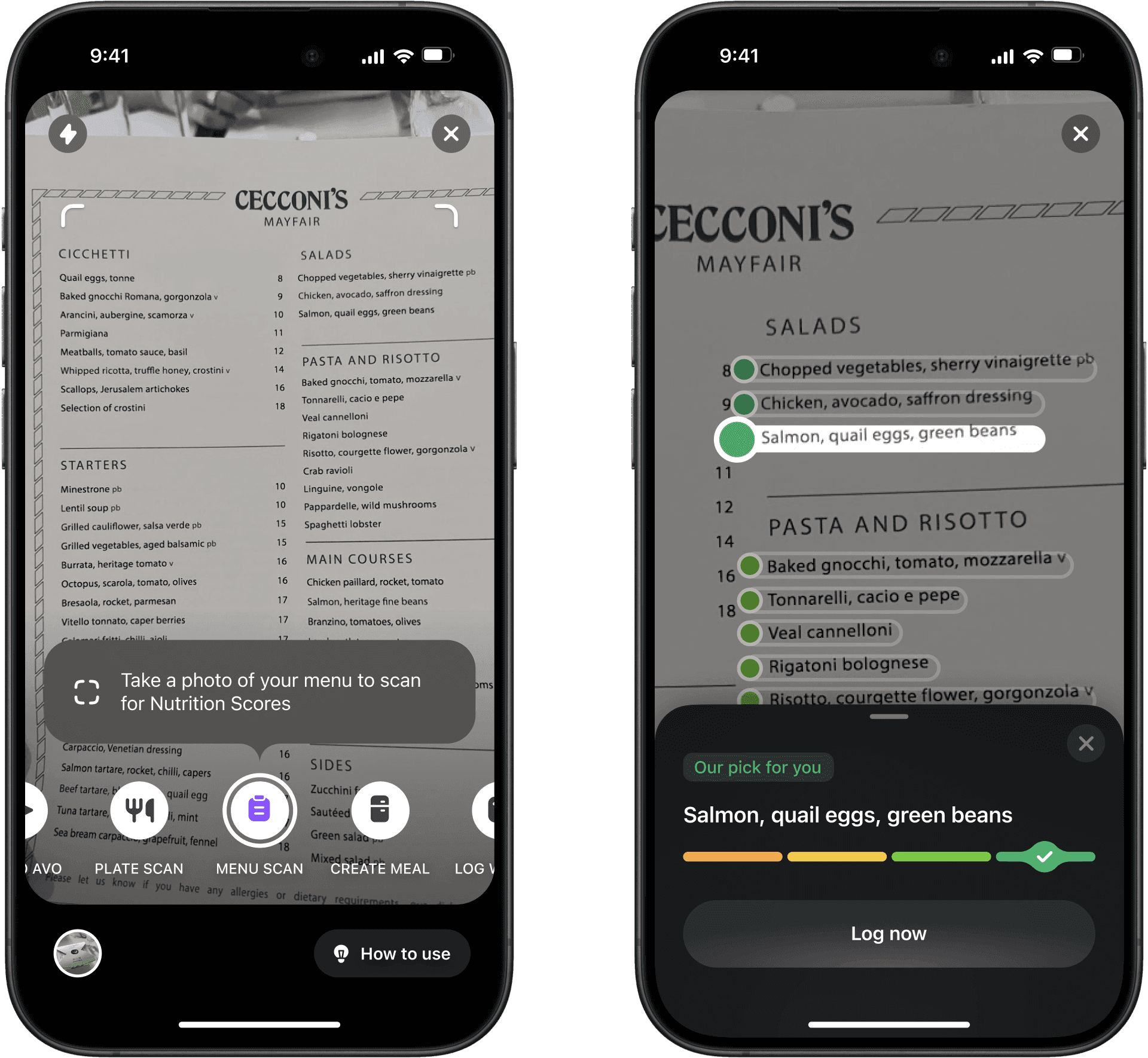
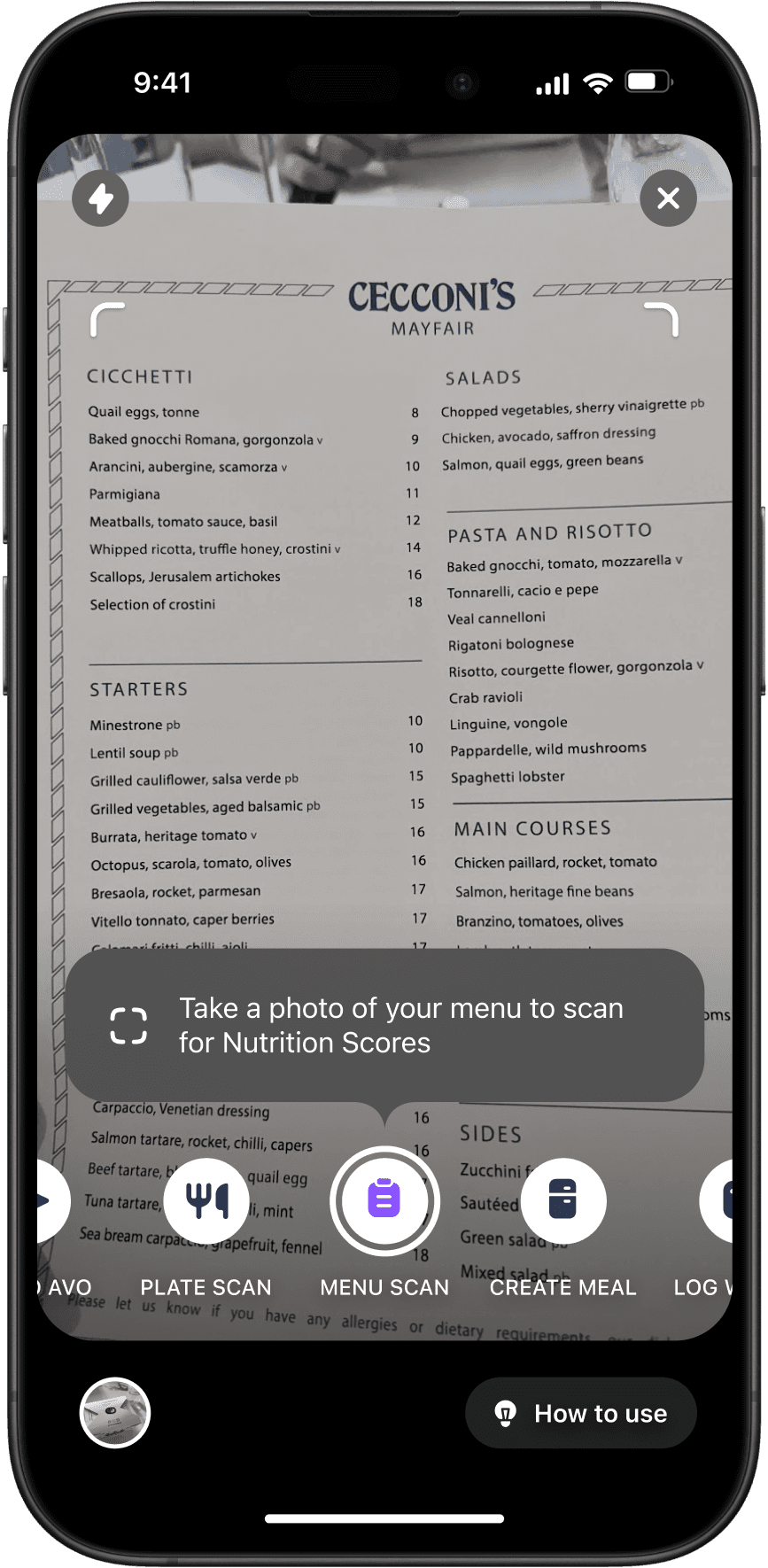
We built a set of modes around the use cases users had requested for years. The app identifies the ingredients, scores the meal, and hands off to Coach Avo when you want to go deeper. Two taps from photo to logged meal.
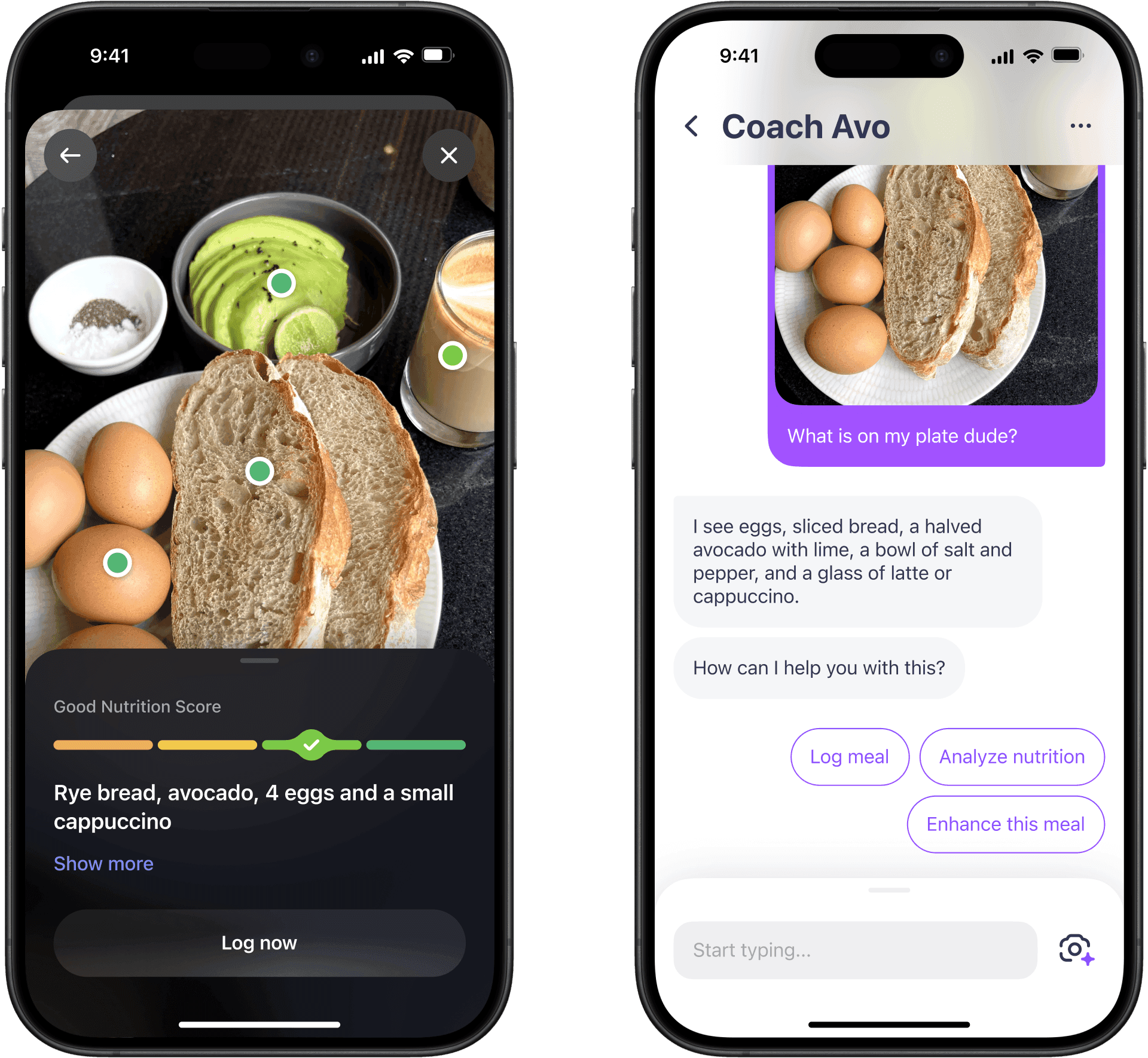

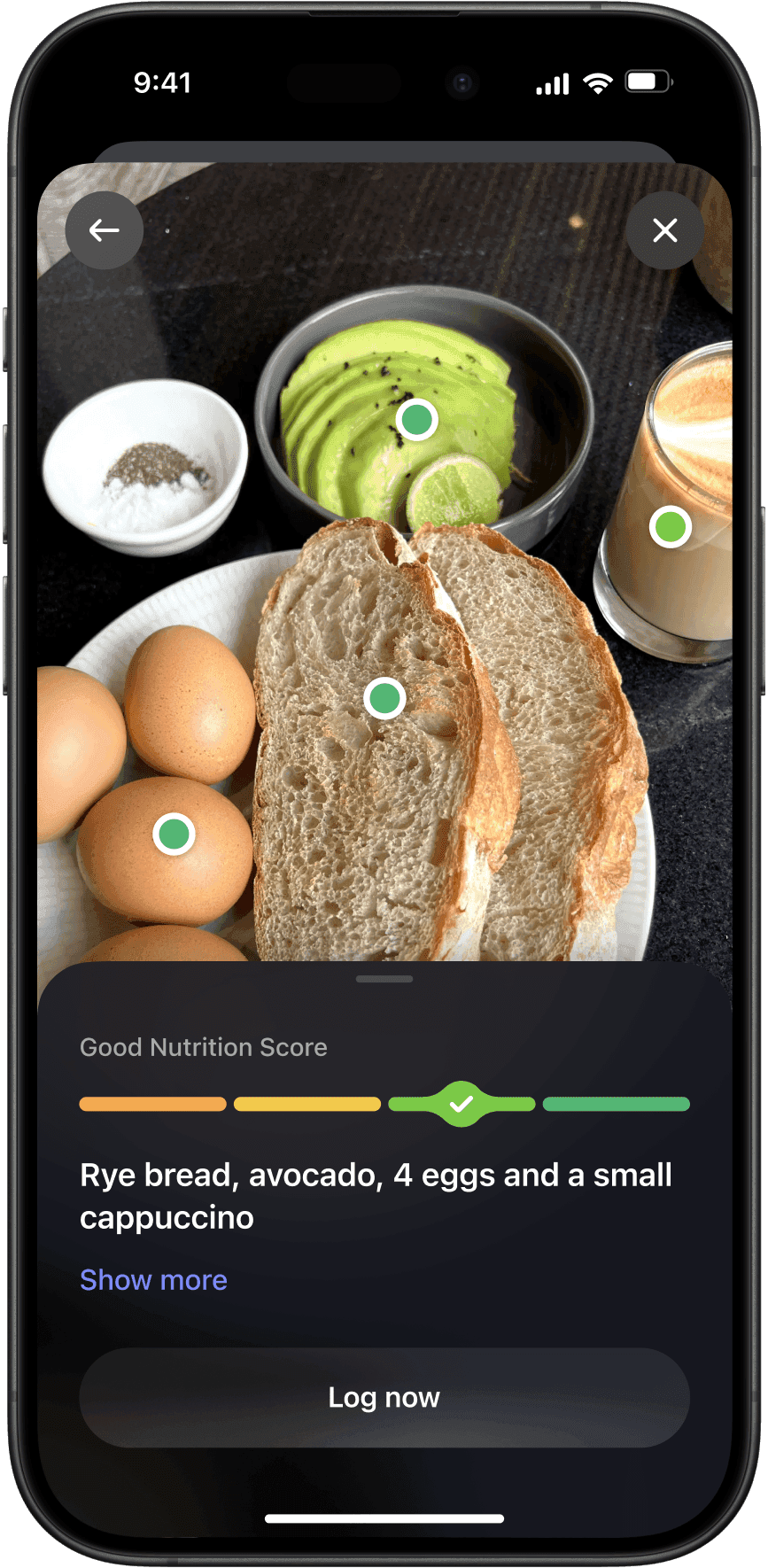
I liked working on this enough to keep exploring in my own time. As the models improved, I explored how to collapse the separate scan modes into one and show nutrition guidance while you scan.
We never shipped it, but I still think it was one of the more interesting directions for the feature.
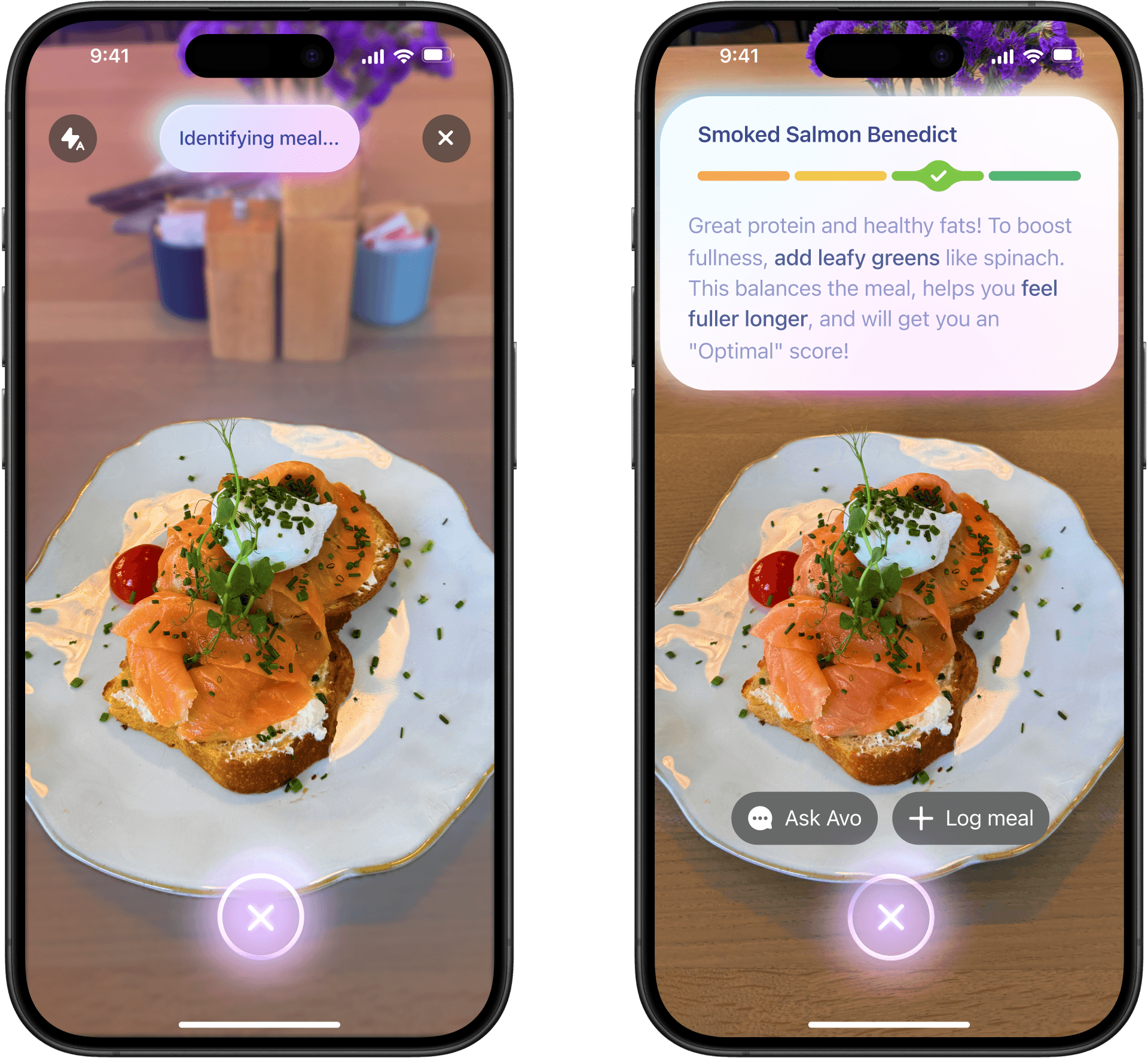
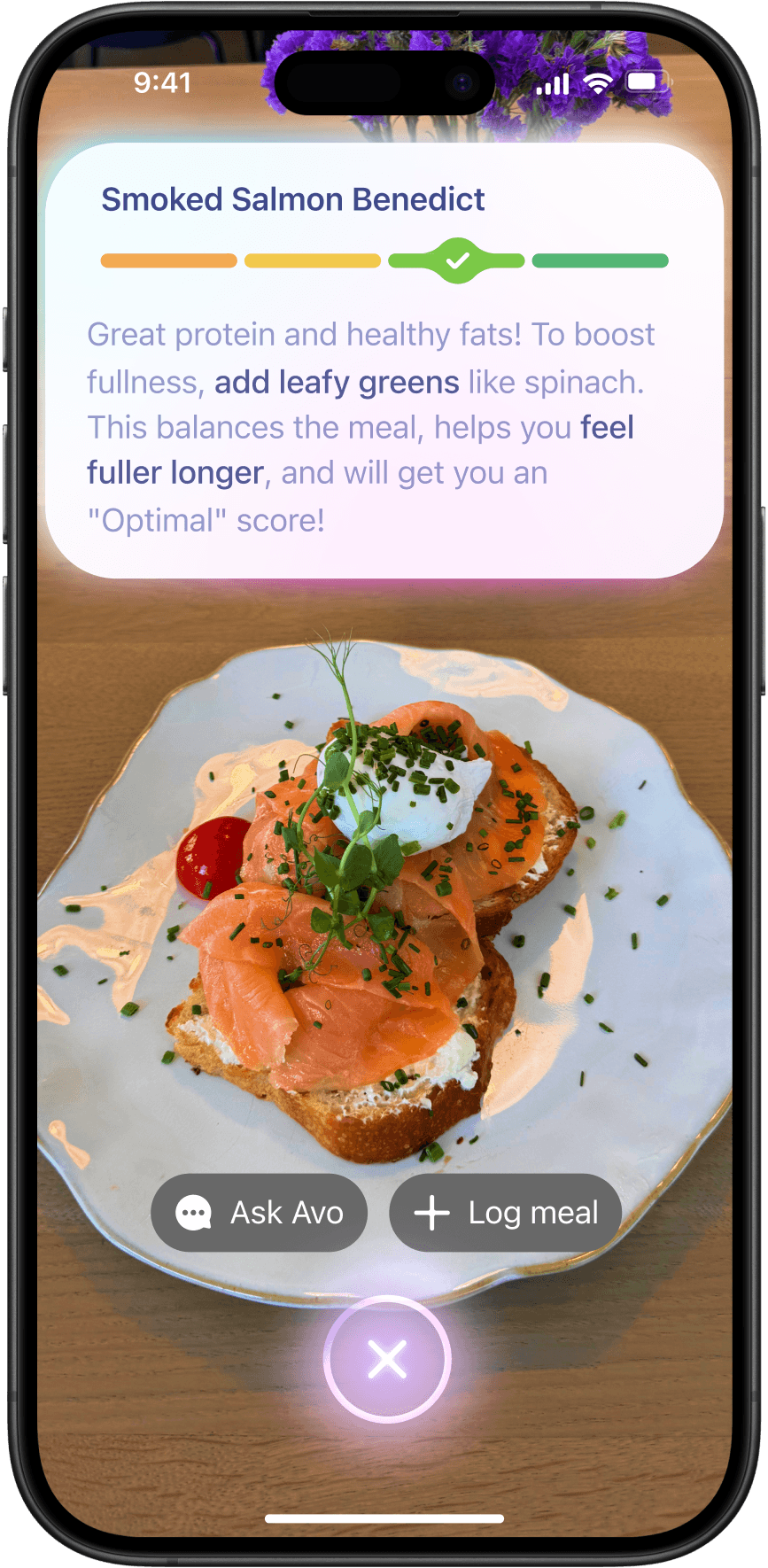
Avo Vision moved overall product retention by +2.1% and D7 meal-tracker retention by +7.7%, with 20% of all daily meal logs eventually coming through the camera.
When Simple later won MedTech's Best Virtual Coach award, smart camera functionality was named as one of Avo’s core pillars.
Conclusion
Tracker retention
+34%
Cumulative
Product retention
+8%
Cumulative
British Dietetic Association
Innovation Award
Food Score and Feedback
We turned food logging from a minor add-on to the fasting tracker into Simple’s strongest retention loop. It became the foundation for the daily plan, gamification and later features.
My work moved metrics, won awards, and became part of Simple’s public story. Food tracking, Nutrition Scores, Avo Vision, and Simple’s broader AI nutrition direction were covered by Forbes, TODAY, TechCrunch, and featured on Apple’s App Store.
What I’m proud of is that we made food logging useful without losing what made the app, ahem, Simple. We kept it light, human, and useful enough for people to keep coming back.
Acknowledgements
Built remotely with a team spread across the world: Elena Deshina, Alisa Korchazhnikova, Ivan Bakanovskiy, Val Scholz, Dimitri Nikogosov, Ro Huntriss, Josie Porter, Karina Delaine, Dmitrii Mochalov, Ruslan Dzhafarov, Alex Ovs, Hemank Sabharwal, David Johnston, and Alesia Privado.
Special thanks to Hemank and Alex. Working with you made this whole project genuinely fun.